
The High-Performer’s Paradox
You’ve spent decades building your career. You manage complex projects, lead teams, and handle a thousand moving parts without breaking a sweat. You are, by all accounts, at the top of your game.
Then, the glitch happens.
It starts small. You’re in a high-stakes meeting and a word you’ve used a thousand times just vanishes. You go to introduce a colleague — someone you’ve known for five years — and their name feels like it’s behind a locked door. You find yourself staring at your calendar, wondering when you scheduled that call and what the objective was.
It’s unsettling. It’s frustrating. Most of all, it’s quiet.
You don’t talk about it because you don’t want people to think you’re “losing it.” You laugh it off as being busy. But deep down, you’re worried. You’re only 48. Or 52. This isn’t supposed to happen yet.
Think about it. You haven’t changed your work ethic. You haven’t lost your intelligence. But your “internal hardware” feels like it’s starting to lag.
This is the paradox of the modern high-performer. The very traits that made you successful — the multitasking, the constant “on” state, the high cognitive load — are the same things creating a massive drain on your neural resources.
The ‘Cognitive Redline’: Why Your Brain Is Sputtering
Look, here’s the deal: what you are experiencing is rarely a sign of early disease. It is more often a sign of a system that has been “redlining” for too long.
Your brain is the most metabolically expensive organ in your body. It demands a constant, high-octane supply of energy and nutrients. When that supply doesn’t meet the demand of your high-pressure life, the first thing to go isn’t your personality or your skills. It’s your recall.
Specifically, capable people in their 40s and 50s hit a “Neural Ceiling” caused by a perfect storm of biological and lifestyle factors:
● The Processing Haze: Your brain produces metabolic waste every time you think. If you don’t clear it, it creates a “haze” that slows down the speed at which you can retrieve names and facts.
● The Mitochondrial Energy Gap: The tiny power plants in your brain cells begin to produce energy less efficiently as we move past 40. Your brain is literally running on a “low battery” mode by 3 PM.
● Executive Overload: You are making more micro-decisions in a single morning than your grandparents made in a week. This may affect the availability of acetylcholine, which plays a role in sharp, fast recall.
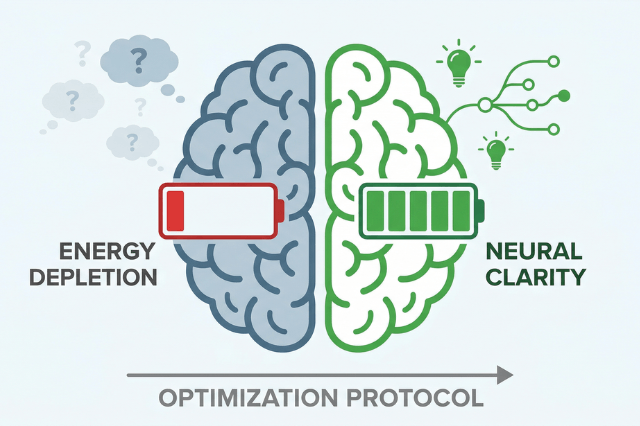
Anyway, if you feel like you’re losing your edge, it’s not because you’re getting “old.” It’s because your brain is trying to run a 2026 workload on a depleted nutrient budget.
The Neural Resilience Protocol: Reclaiming Your Edge
Now, this part is wild. Most people in this situation double down on the wrong things. They drink more caffeine. They take more stimulants. Trying to “power through” rarely solves an underlying nutrient gap.
Researchers in cognitive longevity have found that high-performing brains aren’t just “lucky” — they are well-supported. The Neural Resilience Protocol is a strategic approach to giving the brain the specific raw materials it needs to maintain high-speed recall and deep focus, even under heavy stress.
It focuses on three biological pillars:
● Maintaining Neural Fluidity: Supporting the ease with which signals move between neurons so names and facts arrive instantly. ● Optimizing Mitochondrial Output: Helping your brain cells produce the energy needed for sustained mental drive. ● Supporting Healthy Circulation: Ginkgo Biloba may help support healthy blood flow, which plays a role in delivering oxygen to the prefrontal cortex where your executive decisions happen.
What I started noticing — and what many people in their 50s also report — is that once these neural pathways are properly supported, that “running through mud” feeling starts to lift.
The fear of losing your edge can be paralyzing, but the biology of recall is something we can actually support. In recent user feedback, a majority reported noticing a meaningful shift in their ability to stay sharp throughout the day within a few weeks of consistent use. It’s about giving your brain the infrastructure to handle the life you’ve built.

The ‘Peak Performance’ Morning Ritual
High-performance brains don’t leave things to chance. They use a protocol.
To stop those embarrassing slips and keep your recall sharp, you need to set the biological stage before your first email of the day. This is the routine designed to bypass the 40s “memory lag”:
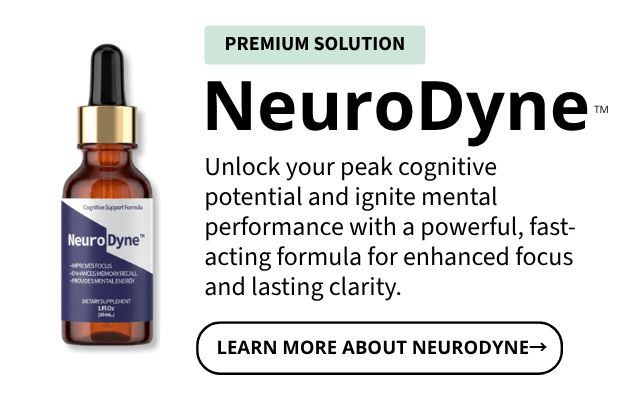
● The Cellular Hydration Flush: Drink 16oz of water immediately upon waking. Even mild dehydration can interfere with how efficiently your brain clears metabolic waste. This “flushes” the system before the day’s haze can settle. ● The Neuro-Drive Window: Use the Neurodyne formula immediately. One dropper under the tongue. One in water. By delivering all seven bioavailable compounds (like Lion’s Mane and Alpha GPC) before your first cognitive load, you are priming the pump for instant recall. ● The Neural Decompression Break: At 2 PM, take 10 minutes away from all screens. No audio. No input. This allows your brain to shift from high-output mode to consolidation, reducing the afternoon decision fatigue that often leads to memory slips.
The kicker? Most people wait for a crisis to start a ritual. But the most successful people treat their brain health like their financial portfolio. They invest in it daily. After establishing this daily routine, many describe noticing that the afternoon “static” simply doesn’t happen anymore.
What It Feels Like to Have Your Brain Back
The shift is rarely a “bolt of lightning.” It’s a series of quiet victories.
It’s being in that meeting and the word you need is right there, waiting for you. It’s meeting a client and their name surfaces instantly, without the internal scramble. It’s ending your workday at 6 PM and still having the mental availability to be present for your family, rather than being a “walking ghost” of cognitive exhaustion.
That’s what I started noticing over time as I stayed consistent. The friction was gone.
At work, your tracking becomes more accurate. You follow the threads of complex conversations without losing the plot. At home, you’re present. You’re not just physically in the room; you’re mentally available.
That’s what users report when the metabolic haze is being managed daily and the 7-Ingredient Cognitive Shield is supporting the results it was designed for.
“It’s just aging” rarely tells the full story. Memory loss in your 40s and 50s is often just a sign of a system that needs a refresh. The 60-day satisfaction guarantee means you can find out what your “peak version” feels like without any risk.
You’ve worked too hard to let a “nutrient gap” steal the edge you’ve spent a lifetime building.