
That ‘Doorway Moment’: Why It’s Happening More Than You’d Like to Admit
You’re in the middle of something. Could be work, could be a Sunday afternoon at home. A thought crosses your mind. You need something from the other room. Simple.
You get up. You walk through the door.
Gone.
Not the item. Not even the general category of item. Just. Gone. You’re standing in your bedroom (or kitchen, or garage) with the vague, unsettling sense that something brought you here. But your brain has already moved on, leaving zero trace of the original intention.
You stand there for a second. Maybe two. Then you walk back to where you started, hoping the original context will jog something loose.
Sometimes it works. Sometimes it doesn’t.
If this is happening to you more than it used to, you’ve probably done what most people do: told yourself it’s just age, laughed it off and moved on. But here’s the thing. It’s happening at 42. At 47. At 53. To sharp, capable, high-functioning people who can’t afford to be losing their train of thought this easily.
And the explanation most people accept (it’s just getting older) is one of the least accurate things you’ve probably ever believed about your own brain.
Your brain isn’t declining. It’s overloaded. And there’s a very specific reason this keeps happening.
The Hidden ‘Brain Tax’ Behind That Blank Doorway Stare
Look, here’s the deal: what you just experienced in that doorway has a name. Researchers call it a “location-updating effect.” Every time you walk through a physical boundary (a door, a hallway, a threshold) your brain files away what you were just thinking about and prepares to process whatever comes next.
It’s an efficiency feature. Not a bug. Your brain is constantly prioritizing active working memory, and walking through a door signals a context switch. Under normal conditions, the original thought is retrievable. It’s still there. You just have to reach back for it.
The problem happens when your working memory is already maxed out. When your cognitive tank is running low. When the filing system is so backed up that the original thought doesn’t just get temporarily archived. It gets lost entirely.
And for most Americans over 40, that’s not the exception anymore. It’s the daily reality.
Mental Haze Buildup
Here’s what nobody explains at your annual physical.
Your brain produces metabolic byproducts constantly. Every thought, every decision, every memory retrieval generates cellular waste. Under optimal conditions, your brain flushes this buildup during deep sleep, through a natural cleansing process your body runs automatically.
The issue? Most people over 40 aren’t getting enough deep, restorative sleep to complete that cycle. So the haze accumulates. Gradually. Day after day, it settles into your neural pathways like sediment at the bottom of a river. Things that should flow freely start to move sluggishly. Context gets dropped. Working memory gets spotty.
Users report noticing it as a kind of “cognitive static.” Like trying to tune into a radio station that’s just slightly off frequency. The signal is there. It’s just not clean.
The Cellular Energy Gap
Think about what your brain actually runs on.
ATP. Adenosine triphosphate. The cellular fuel your mitochondria produce. Your brain consumes roughly 20% of your total energy output despite being only 2% of your body weight. It is, by far, the most metabolically expensive organ you have.
Now, this part is wild. As mitochondrial efficiency naturally changes with age, your brain’s “power plants” may produce less ATP per cycle. The same mental workload that felt effortless at 34 now quietly depletes resources faster than they’re being replaced. Which means your working memory (the system responsible for holding intentions in mind long enough to act on them) runs short on fuel by mid-morning.
That doorway moment? It’s often just your brain rationing resources. Dropping the lowest-priority item in the queue to keep everything else running.
Modern Decision Fatigue
The kicker? You’re making far more cognitive demands on your brain than any previous generation ever did.
Before you’ve had breakfast, you’ve processed dozens of notifications, made micro-decisions about what to respond to and already shifted mental context multiple times. By the time you’re standing in that doorway at 2 PM, your brain has been running complex executive functions for hours without a real break.
Every decision draws from the same pool. Your brain doesn’t distinguish between answering a work email and deciding what to eat for lunch. They both cost something. And by afternoon, the account is overdrawn.
The ‘Neural Resilience Protocol’: What’s Actually Helping
Anyway, here’s where the conversation gets more useful.
A growing body of research in cognitive performance and neuroscience is focused on what you can do proactively. Not after the symptoms become serious. Not after a diagnosis. Right now, while your brain is still fully capable of responding to the right inputs.
The Neural Resilience Protocol is what researchers and high-performance practitioners call the strategic use of specific neuro-nutrients to support the brain’s natural ability to clear metabolic haze, maintain healthy neural communication and protect working memory under daily cognitive load.
These aren’t stimulants. They don’t artificially spike your focus for two hours and then drop you. They work with your brain’s existing chemistry to support the conditions under which it naturally performs best.
Supporting Healthy Neural Pathways
Lion’s Mane Mushroom is the most researched functional mushroom for cognitive support. Early research suggests it may support the production of Nerve Growth Factor, a protein associated with the health and maintenance of neural connections. Users report noticing a gradual improvement in recall and mental fluency. Not a dramatic overnight shift. More like the static slowly clearing.
Bacopa Monnieri is studied for its potential to promote memory retention and support cognitive function under chronic stress. It builds in your system over three to four weeks. But users consistently report that once it kicks in, the experience of having a thought and actually holding onto it long enough to act on it becomes noticeably easier.
Huperzine A is associated with maintaining healthy acetylcholine levels, the neurotransmitter most directly involved in attention, working memory and the ability to hold an intention in mind across a context switch (like walking through a door). Early research suggests it may support the kind of moment-to-moment recall that makes these “doorway moments” less frequent.
Alpha GPC is associated with mental drive and sustained prefrontal cortex function. The kind of focused, sequential thinking that lets you carry a thought from one room to the next without losing it in transit.
Natural Cognitive Clearing
Ginkgo Biloba is one of the most widely studied botanical compounds for brain support. Research focuses on its potential role in promoting healthy cerebral circulation, which may support the brain’s ability to deliver nutrients to active areas and naturally clear the metabolic haze that accumulates during sustained cognitive work.
Phosphatidylserine may support neural fluidity, the efficiency of neurotransmitter movement between cells. Think of it as reducing the friction in your brain’s signal pathways. The ones that carry intentions from formation to execution.
The Bioavailability Factor
Here’s what most people miss.
You can’t get these compounds in meaningful concentrations through diet. Not even a very good diet. The amounts associated with cognitive benefit in research require a precision and concentration that whole foods simply can’t deliver. A specialized extraction process concentrates each compound into a bioavailable form your brain can actually absorb and use.
L-Theanine, the seventh compound in the stack, promotes calm focus. A state of alert relaxation that supports working memory without the anxiety or jitter that comes from stimulant-based approaches. Users report that it makes the experience of the full formula feel smooth and sustainable rather than forced.
Together, these seven compounds form what users are calling the 7-Ingredient Cognitive Shield. Early research suggests this kind of targeted nutritional support may optimize the brain’s Deep-Cycle Cognitive Refresh process, supporting the natural clearing of metabolic buildup that allows working memory to function cleanly.
If the doorway moments have become part of your daily routine, that’s a signal your brain is asking for exactly this kind of targeted support. Many people find that a consistent daily protocol makes a noticeable difference in how reliably their intentions actually make it from one room to the next.

The 5-Minute Morning Routine That Supports All-Day Recall
You don’t need a complicated protocol. You need a consistent one.
Hydration first. Sixteen ounces of water before anything else. Your brain is roughly 75% water. After eight hours without hydration, even mild dehydration (1-2%) measurably affects working memory and attention. This single habit costs nothing and takes thirty seconds. Most people skip it every single day.
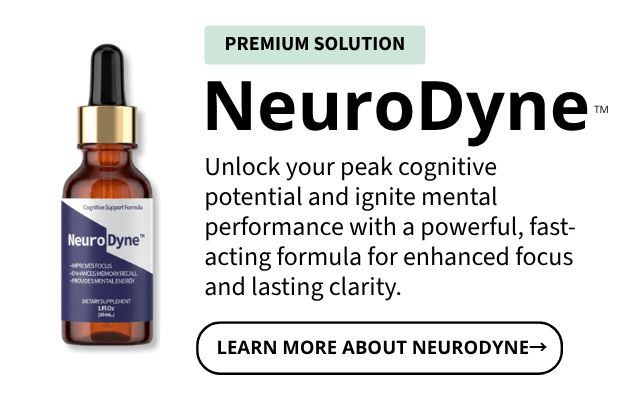
Targeted nutrients. One dropper of the Neurodyne formula under the tongue. Hold for 30 seconds. Swallow. Then a second dropper in water. Done. Under five minutes. Built into a routine you already have. No prep, no guesswork. All seven compounds in precise concentrations, bioavailable and ready to work.
A real cognitive break before 2 PM. Ten minutes away from every screen. No podcast, no scrolling. Walk outside or sit somewhere quiet. This is when your brain consolidates short-term information and clears the working memory queue. The people who rarely have “doorway moments” are almost always the ones who take these breaks intentionally. Not the ones who power through without stopping.
For most people, the hardest part isn’t knowing what to do. It’s building a routine consistent enough to let these habits actually compound. A targeted daily formula takes that variable off the table entirely.
What Life Looks Like When the Static Clears
Here’s what users report noticing around week three to four of the protocol.
They walk into a room and they know exactly why they’re there. The thought doesn’t evaporate. It stays. They’re following through on intentions without retracing their steps. Names come back faster. The thread of a conversation doesn’t get dropped. They’re present in a way that feels different from just “not tired.”
At the end of the day, they still have something left. Not just the absence of exhaustion. Actual mental availability. For their kids, their partner, the things that actually matter.
That’s not a dramatic transformation. It’s just what your brain is supposed to feel like when it’s not running under a constant load of metabolic haze and cellular energy debt.
The doorway moments aren’t inevitable. They’re a signal. And signals, when you understand them, point toward solutions.
The 60-day satisfaction guarantee means there’s no risk in finding out what your brain feels like when it has what it needs.